You're buying a business
Before you close, we show you how the business really runs and what depends on the seller. After you close, we rebuild its operations during your first hundred days, while the seller is still around to answer questions.
Nearly every small business we walk into is held together the same way. There are a handful of subscriptions that each do one job, a spreadsheet or two that only one person understands, and an owner who carries the rest around in their head. It works until that person is out sick, or the business is sold, or it grows past what the spreadsheet can hold.
AltoSky replaces that with one system built for that particular business. We spend time learning how the work really moves, from the first phone call to the deposit landing in the bank, then we build software around it and put AI to work inside it. We have done this for a seasoning manufacturer, a dental lab, salons, pet groomers and nine other kinds of service business. No two of those systems look alike, because no two of those businesses run alike.


A seasoning company with a small crew and one production room carries the same obligations as a food plant fifty times its size. Every label needs an accurate nutrition panel. Every batch has to be traceable, which means knowing which supplier lot of each ingredient went into it and which customers received product from it. If a supplier calls about a problem with a shipment of paprika, the company has to be able to say within hours where that paprika ended up.
The software that handles this well is written for large manufacturers and sold at prices to match. Small producers mostly get by on paper batch sheets, a spreadsheet for inventory, and a label file somebody updates by hand. That was the situation here.
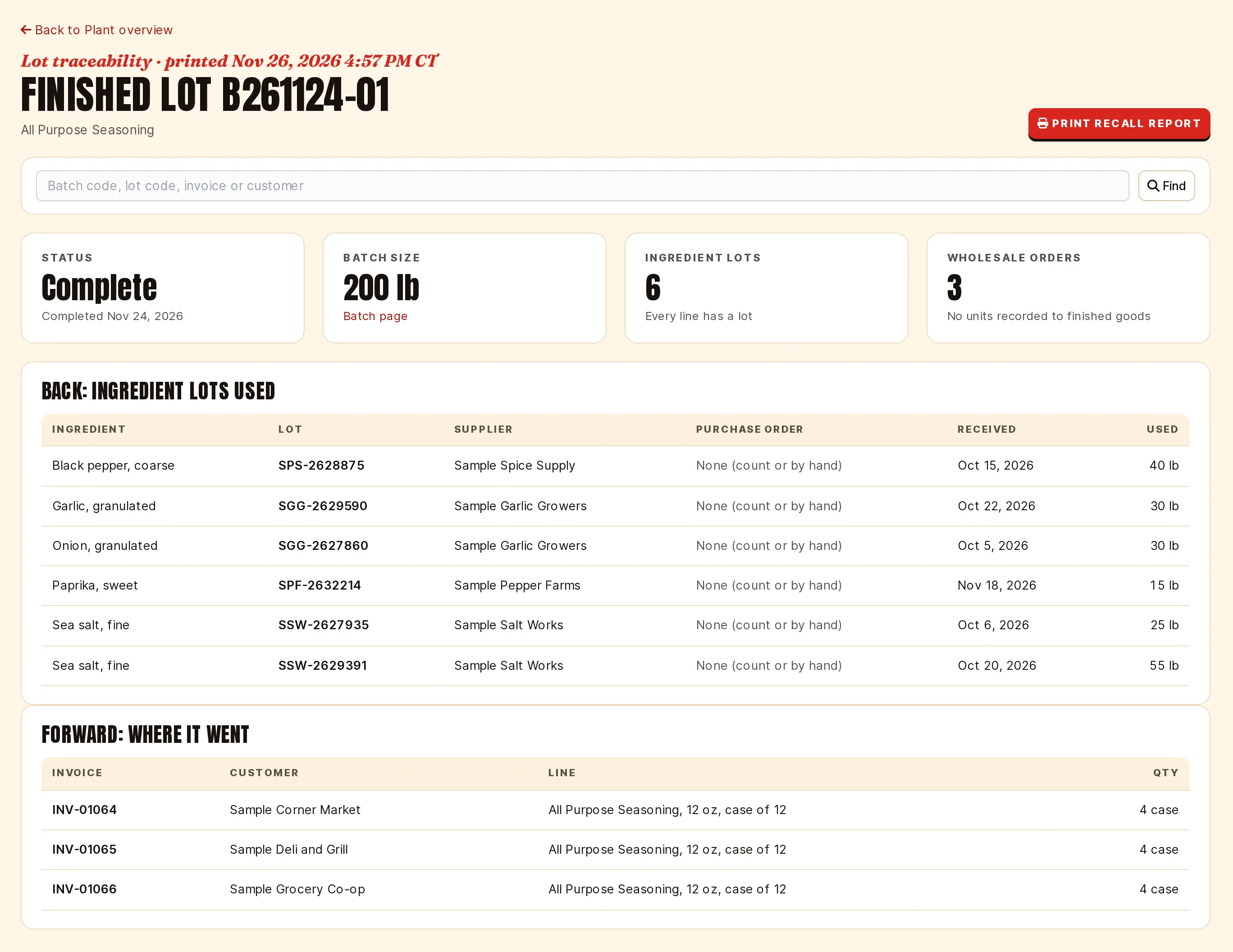
We built the company its own production system. When ingredients come in the door, receiving logs each supplier lot. When the crew blends a batch, the system records which lots went into it and takes those quantities out of inventory. The finished product gets a lot number of its own, and shipping records which orders that lot went out on. To trace anything, in either direction, someone types in a lot number and reads the answer off the screen.
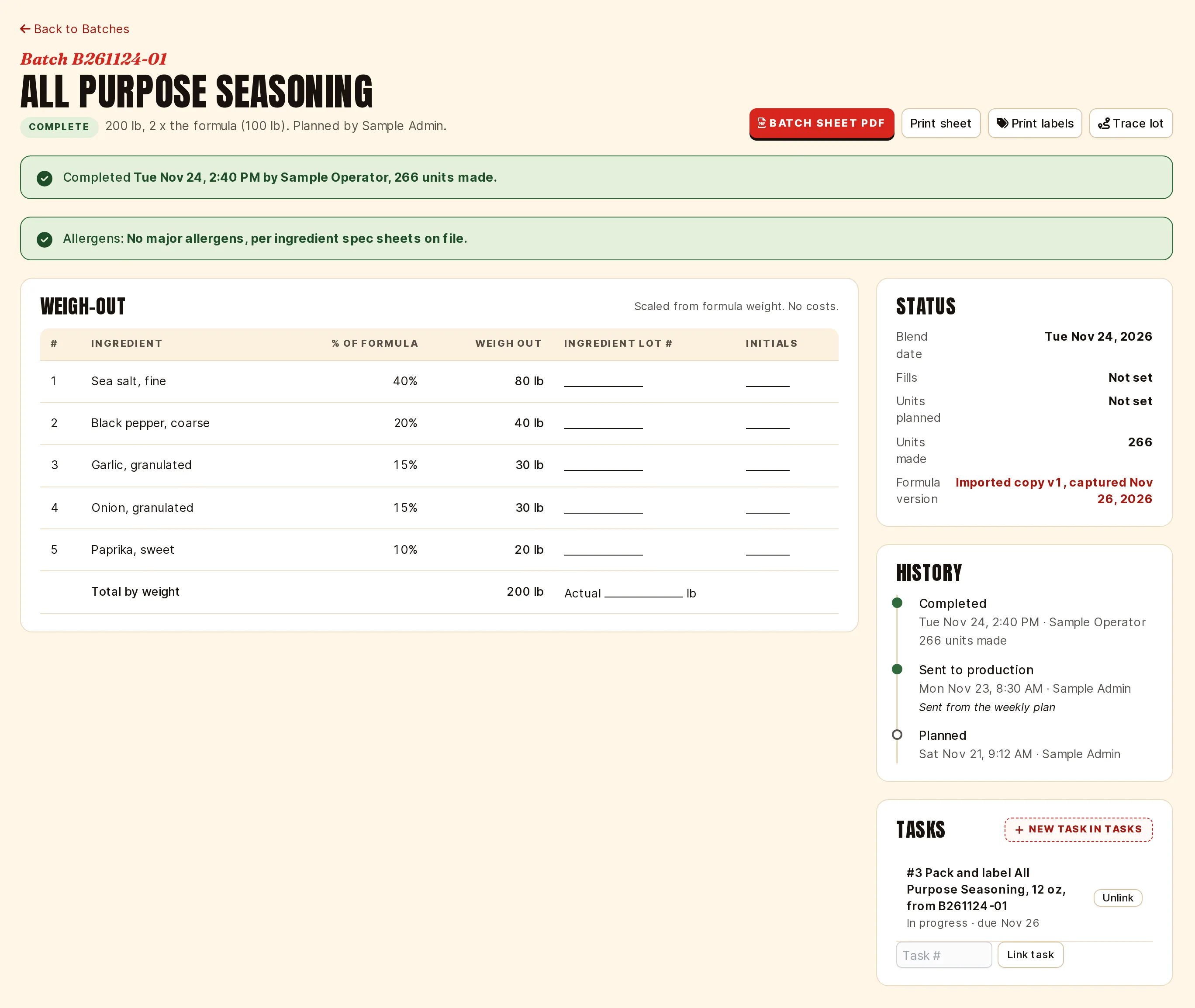
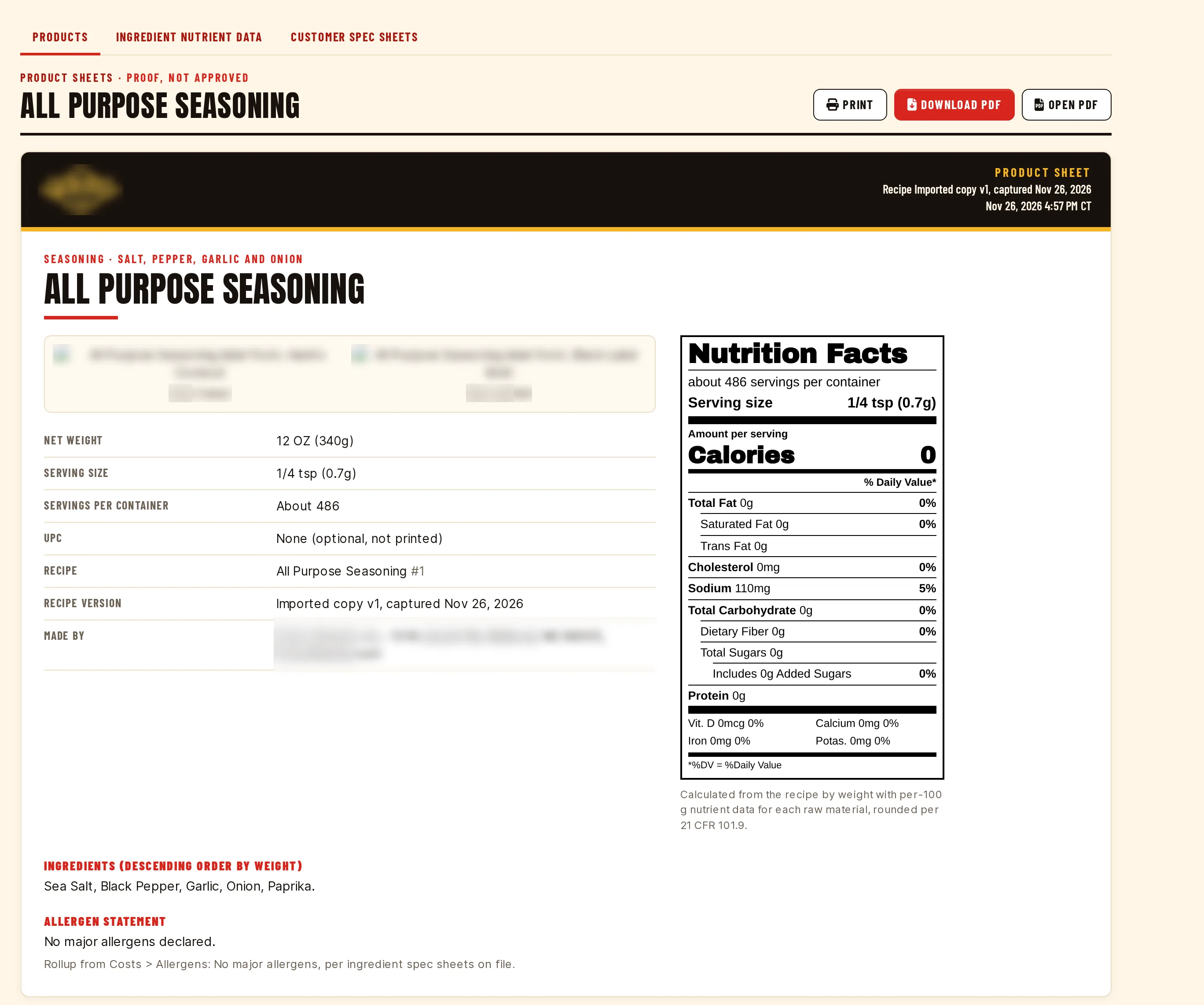
The rest of the production side runs through the same system. Nutrition panels are calculated from the recipe and placed on the label, so a change to a blend changes the label with it. The production schedule, the inventory counts and each person's task list for the day all come from the same records. Wholesale customers place their orders through an account of their own, and those orders feed the same schedule.
None of this is exotic. Large food companies have worked this way for decades. What changed is that a company this size can now have it, fitted to its own recipes, its own room and its own customers.
A traditional dental lab is a room full of technicians and equipment producing crowns, dentures and appliances on site. The work is skilled, the equipment is expensive, and the lab's prices have to cover both. Most labs are built this way because, until recently, there was no practical way to coordinate the work any other way.
The lab we built for is organized differently, and the software is what makes that possible. A dentist's office places a case through an online portal. The system sends the production work to an outside partner suited to that type of case, and those partners can be anywhere in the world. The portal follows the case from the moment it is placed until it is delivered, so the dentist's staff can check on it without picking up the phone.
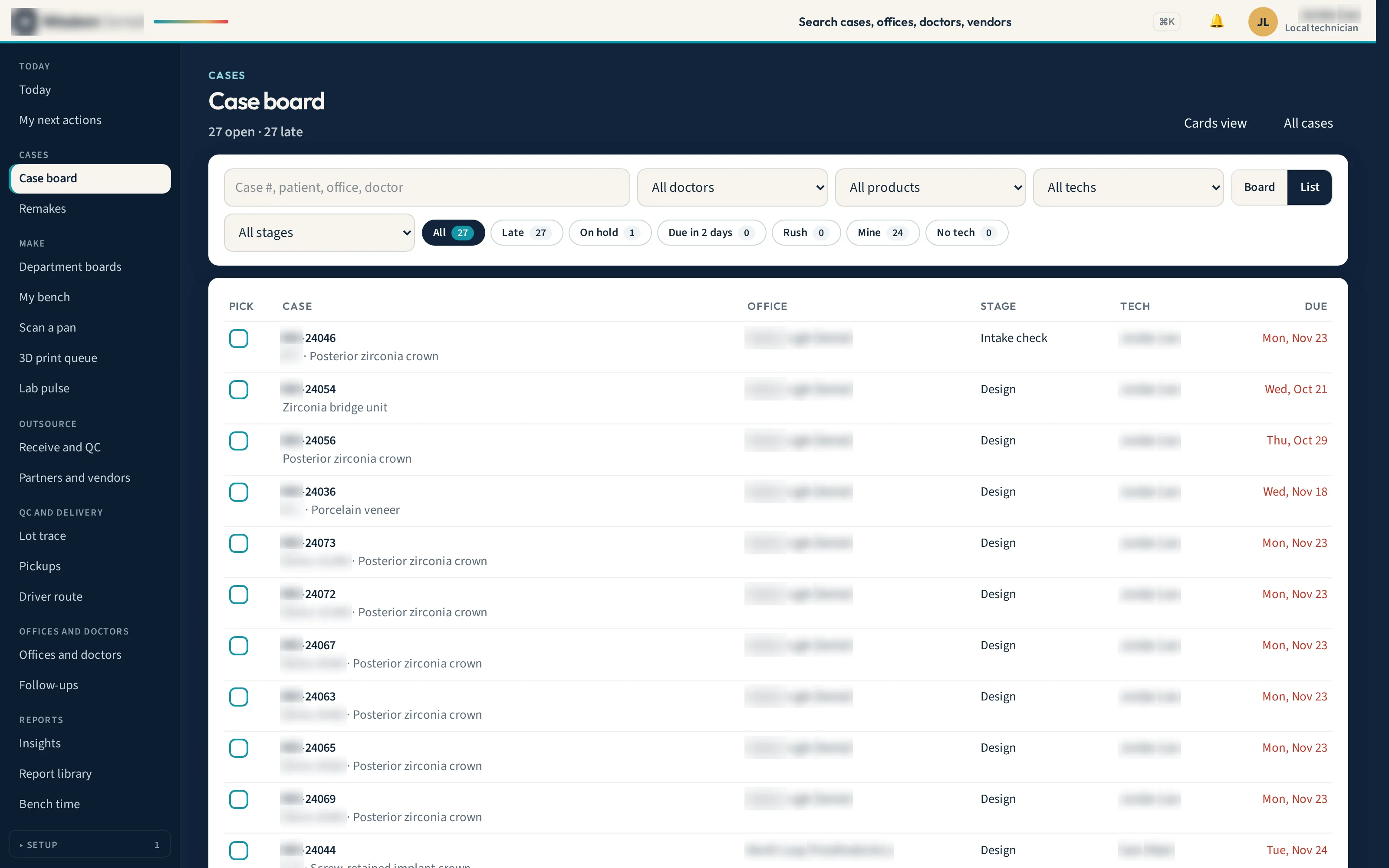
When the work comes back, technicians in Omaha take over. They finish it, adjust it, and talk to the dentist directly when something needs to change. The dentist still has a local lab and a person who knows their preferences. What the dentist doesn't have is a bill that carries the cost of a full in-house production floor. The lab's prices are a fraction of what a traditional lab charges for the same work.
You can't run a lab this way on a phone, a fax machine and a whiteboard. Somebody has to know where every case is, which partner has it, when it's due back and who is finishing it. Here the software is the one keeping track.
We also build and operate software companies of our own. The largest is a management system for service businesses that now covers eleven industries: salons and barbers, spas, med spas, tattoo studios, auto detailers, home services, cleaning companies, pet groomers, fitness studios, tutors and rental shops. Underneath, it is one system. On top, each industry gets its own vocabulary and its own way of working, because a groomer and a tattoo artist do not think about an appointment the same way.
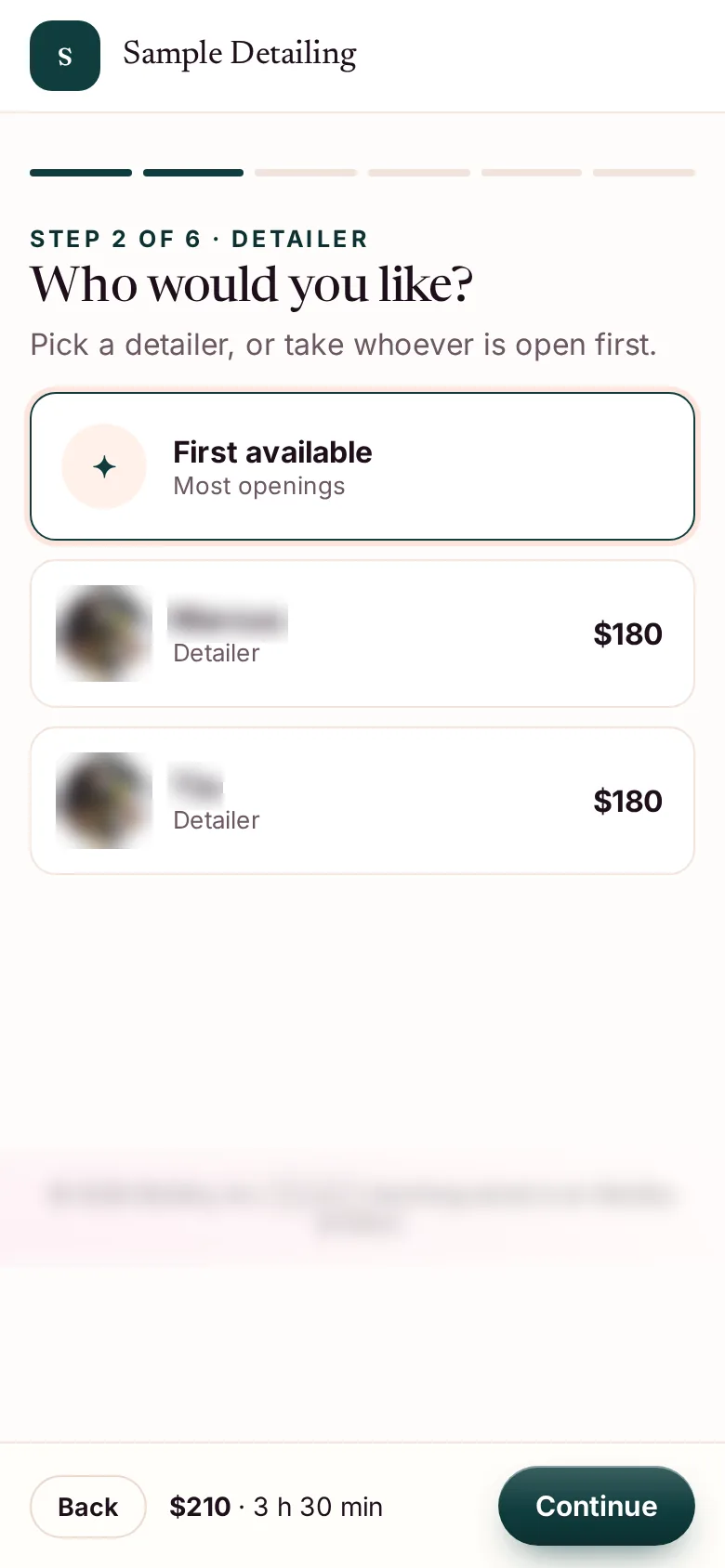
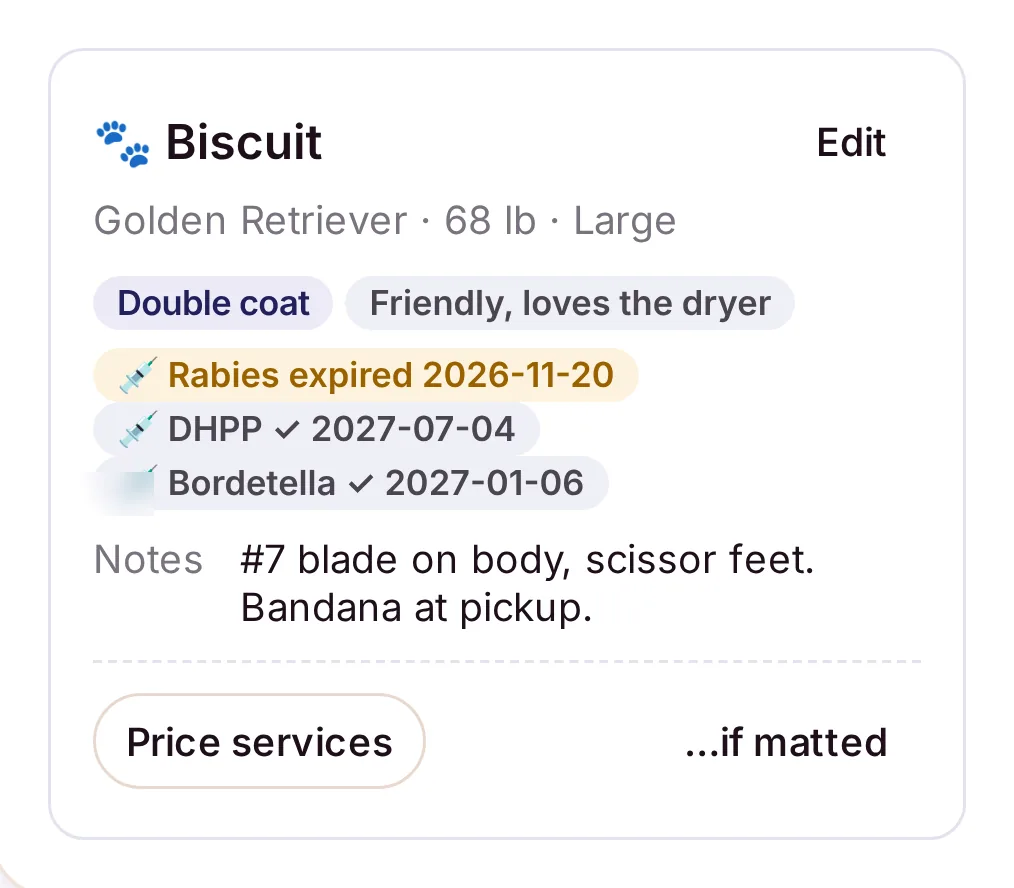
The differences are in the details. A pet groomer's version keeps vaccine records, reads the expiration dates off uploaded documents and flags a pet before its shots lapse. An auto detailer's version changes the quote and adds time to the appointment when the customer says the car is full of dog hair. A salon's version remembers each client's color formula and which stylist they prefer. A cleaning company's version carries the notes on how to get into each house.
Running these businesses ourselves is how we find out what works. When an idea holds up in daily use in our own products, we can bring it to a client's business with some confidence. When it doesn't, we would rather learn that at our own expense.
For most of the history of business software, having a system written for your company meant hiring programmers for a year or more. Banks and airlines and national retailers did it. A company with eight employees did not, so it rented software designed for an imagined average business in its industry and adapted its own habits to fit.
That has changed in the last couple of years, and the reason is specific. AI now writes and tests most of the code. Our people decide what should be built, review what the AI produces, and are responsible for it once it's running. Work that once took a team many months now takes a small group a matter of weeks. That is the entire reason a studio like this can exist, and it is why we can build a production system for a seasoning company or a case portal for a dental lab without either of them needing a software budget.
The same thing makes the system easy to change afterward. When a business adds a location, or a new product line, or a different way of pricing, we change the software to match, usually within days. Rented software can't do that. You get the vendor's next release whenever it arrives, and it was written for everyone.
People hear "AI" and picture a chat window. That is a small part of it. Inside a business we've built, AI is doing ordinary work in the background, most of which nobody notices until they remember how it used to get done.
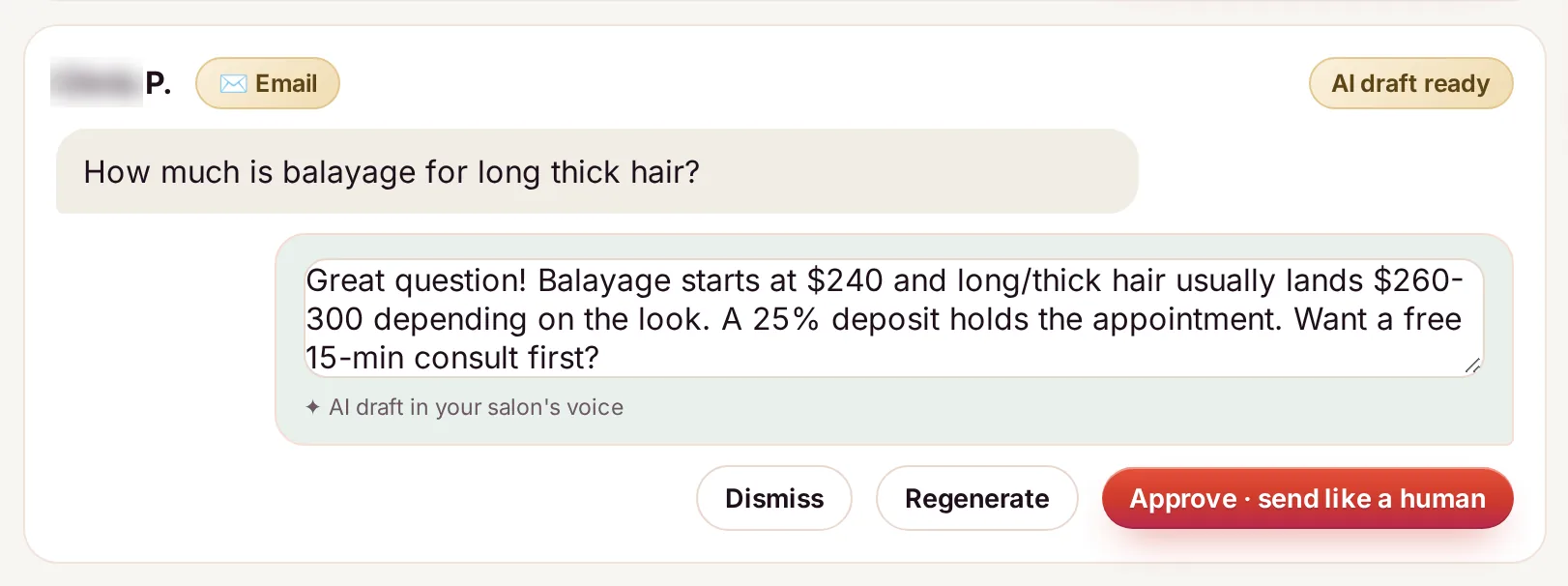
When a customer calls after hours or while everyone is with other customers, the call gets answered. The AI can see the real schedule, so it can offer real openings, take the booking and put it on the calendar. For written messages it drafts a reply using the business's own information, and the owner approves it with a tap before it goes. When someone cancels, it checks the waitlist and offers the slot to the next person who wanted it.
A great deal of what goes wrong in a small business is a record that didn't get made. The job that was finished and never invoiced. The ingredient lot nobody wrote down. The waiver that wasn't signed before the appointment. In a system built around the work, most records are a by-product of doing the job. Checking a pet in confirms its vaccines are current. Blending a batch creates the batch record. Closing a job produces the invoice.
Reminders go out before appointments. Receipts go out after payment. Clients who are due to come back get a nudge at about the time they usually rebook, and clients who have drifted away get a message meant to bring them back. Customers who just had a good visit are asked for a review. All of it is written in the business's own voice, and all of it happens whether or not anyone remembered.
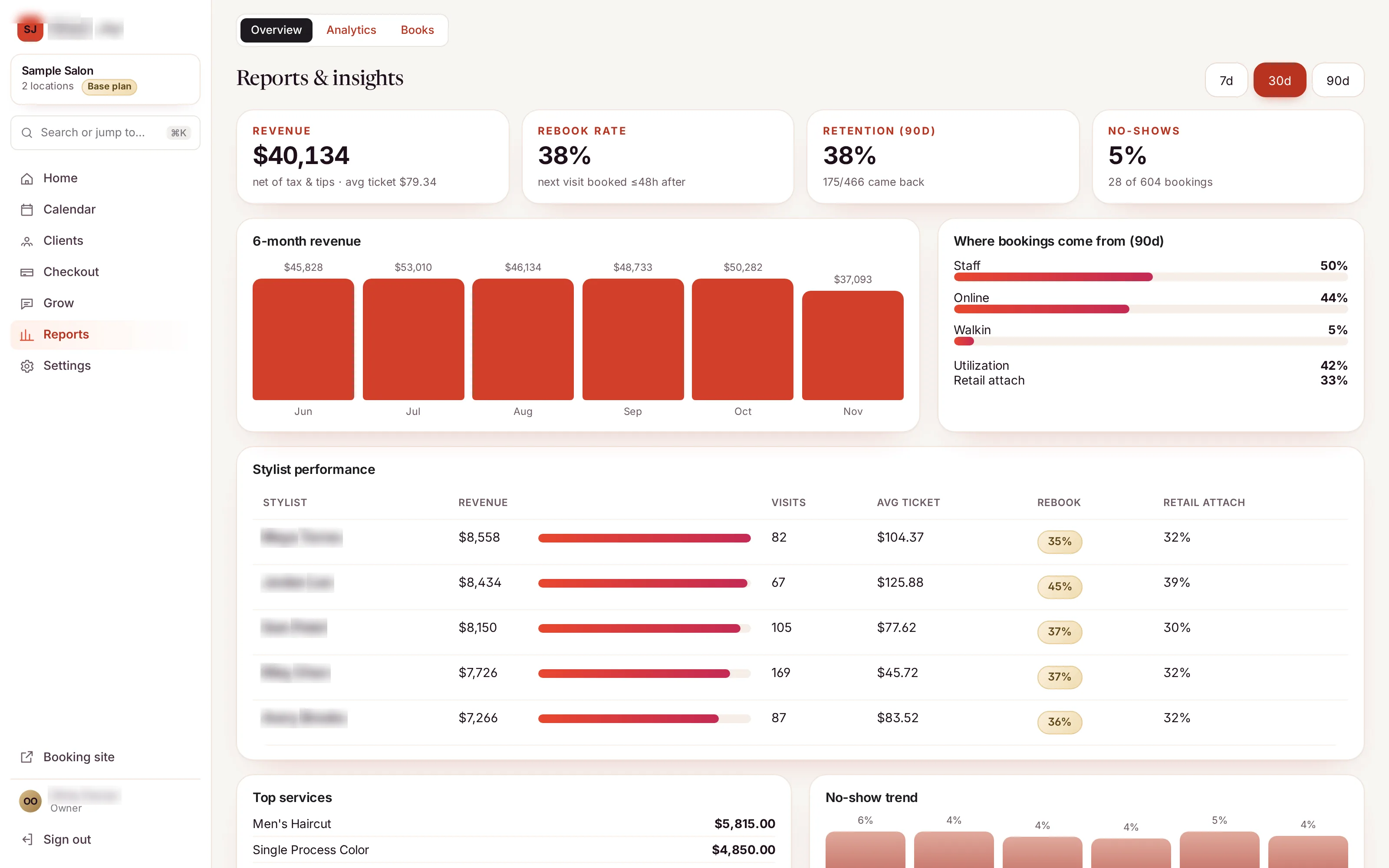
The owner can see bookings, revenue, deposits collected and how many clients rebooked before they left, as of today, without waiting for a bookkeeper to close the month. When something moves in the wrong direction, it shows up while there is still time to do something about it.
AI gets things wrong sometimes, and a small business can't afford to have its software improvising with customers or money. So every system we build draws the same line. Routine work that has been done the same way a hundred times runs on its own. Anything new, anything involving money leaving the business, and anything that speaks for the owner in a way they haven't already approved waits for a person.
| Runs on its own | Waits for your approval |
|---|---|
| Runs on its ownThe first answer on calls and messages | Waits for your approvalAnything going live for the first time |
| Runs on its ownReceipts, reminders and confirmations | Waits for your approvalPrices and offers |
| Runs on its ownInventory counts, lot records and reorder alerts | Waits for your approvalRefunds and any movement of money |
| Runs on its ownMonitoring, backups and security updates | Waits for your approvalAny non-standard message sent in your name |
| Runs on its ownDrafts of replies, posts and reports |
Behind the software there is a team in Omaha that built it and is responsible for it. When something breaks at two in the morning, it is our problem before it is yours.
Most of the people who contact us are in one of four positions. The work is similar in each, but the order and the urgency are different, so we've written a page for each one.
Before you close, we show you how the business really runs and what depends on the seller. After you close, we rebuild its operations during your first hundred days, while the seller is still around to answer questions.
A business that lives in its owner's head is hard to sell and harder to inherit. We move what you know into a system that a buyer can inspect and a successor can run.
Calls are going unanswered, invoices are going out late and the software can't be updated. We stop the losses that can be stopped this month, then rebuild the rest in order of what pays back fastest.
We build the whole operation before you open, so that on the first day the phone gets answered, payments go through and every customer is already in your records.
You fill in a short form about the business. A person here reads it that day. Within two business days we call, and the call is mostly us asking questions about how things work now. Two business days after that you have a written plan and price. You get two weeks to think about it, and if you decide against it we don't chase you. If you go ahead, work normally starts the following week.